Makar Sankranti, one of the most important harvest festivals of India, was celebrated across the country with great enthusiasm, spiritual devotion, and cultural richness. The festival marks the auspicious transition of the Sun into the zodiac sign of Capricorn (Makar), symbolizing the end of winter and the beginning of longer, brighter days.
From early morning, devotees thronged temples and riverbanks to take holy dips in sacred rivers such as the Ganga, Godavari, Yamuna, and Krishna. Special Surya (Sun God) pujas were performed, seeking blessings for good health, prosperity, and success. Temples across several states witnessed large congregations of devotees offering prayers.
Colorful Kite Flying Becomes the Main Attraction
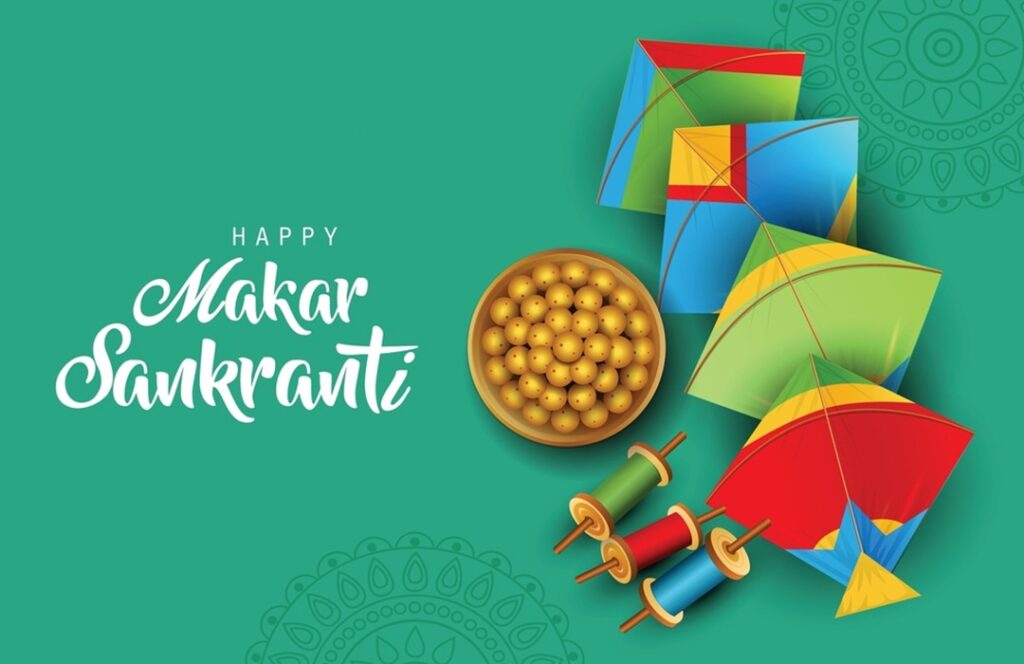
Kite flying emerged as the main highlight of Makar Sankranti celebrations in states like Gujarat, Maharashtra, Telangana, Andhra Pradesh, Rajasthan, and Madhya Pradesh. The sky was filled with thousands of vibrant kites as families gathered on rooftops and open grounds to enjoy the festive tradition.
Cities such as Ahmedabad, Pune, Hyderabad, and Jaipur witnessed large-scale participation, with people enjoying friendly kite battles, festive music, and traditional food. Children and youth were seen actively participating throughout the day, adding energy and excitement to the celebrations.
Traditional Sweets Add Flavor to the Festival
Homes across the country prepared a wide variety of traditional Sankranti delicacies. In Maharashtra, til-gud laddoos were exchanged with the message of “Til-gud ghya, god god bola” (Eat sweets and speak sweetly). In South India, dishes like Pongal, ariselu, and sweet rice were prepared as part of the festive feast.
Sesame seeds and jaggery, which are rich in nutrition and provide warmth during winter, played a key role in festival foods.
Harvest Festival Celebrated with Gratitude
Makar Sankranti also holds great importance as a harvest festival, especially in rural India. Farmers expressed gratitude to nature for a good crop season and prayed for future prosperity. In Tamil Nadu, the festival is celebrated as Pongal, while in Assam it is observed as Magh Bihu, and in Punjab as Lohri, showcasing India’s rich cultural diversity.